Born of extremes
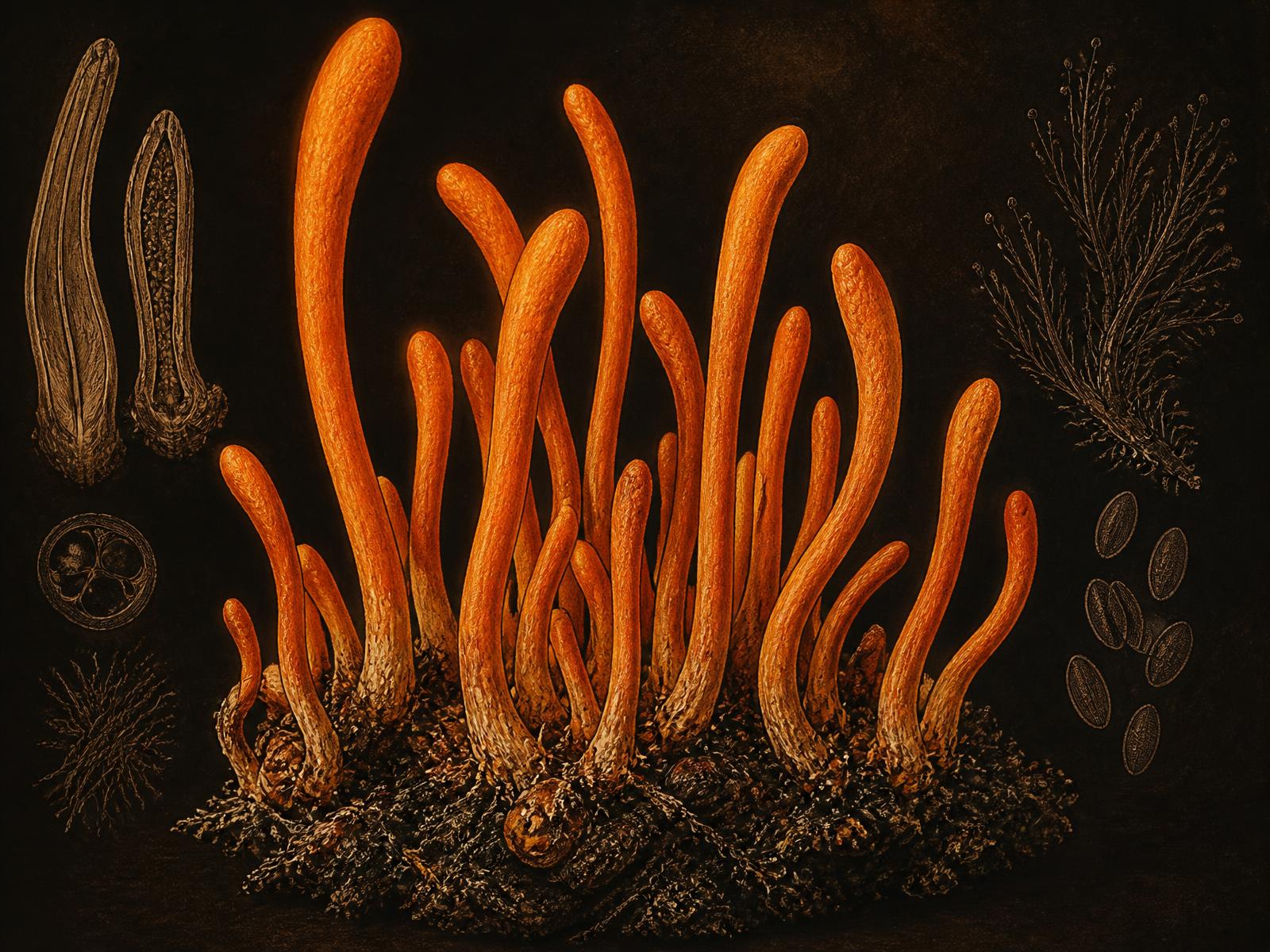
Wild relatives survive thin air and freezing soil above 3,000 m — conditions that shaped an unusual metabolism.
Radhvan Origins · Cordyceps militaris
Cordyceps begins as a spore and ends as an orange spire. We study it, grow it under laboratory control, and explain it plainly — so you can decide what the evidence actually says.
Chapter one
Cordyceps is a genus of ascomycete fungi that grows on insect hosts in the wild. The species used in modern nutrition, Cordyceps militaris, produces a bright orange fruiting body and is now grown entirely on sterile plant-based substrate.
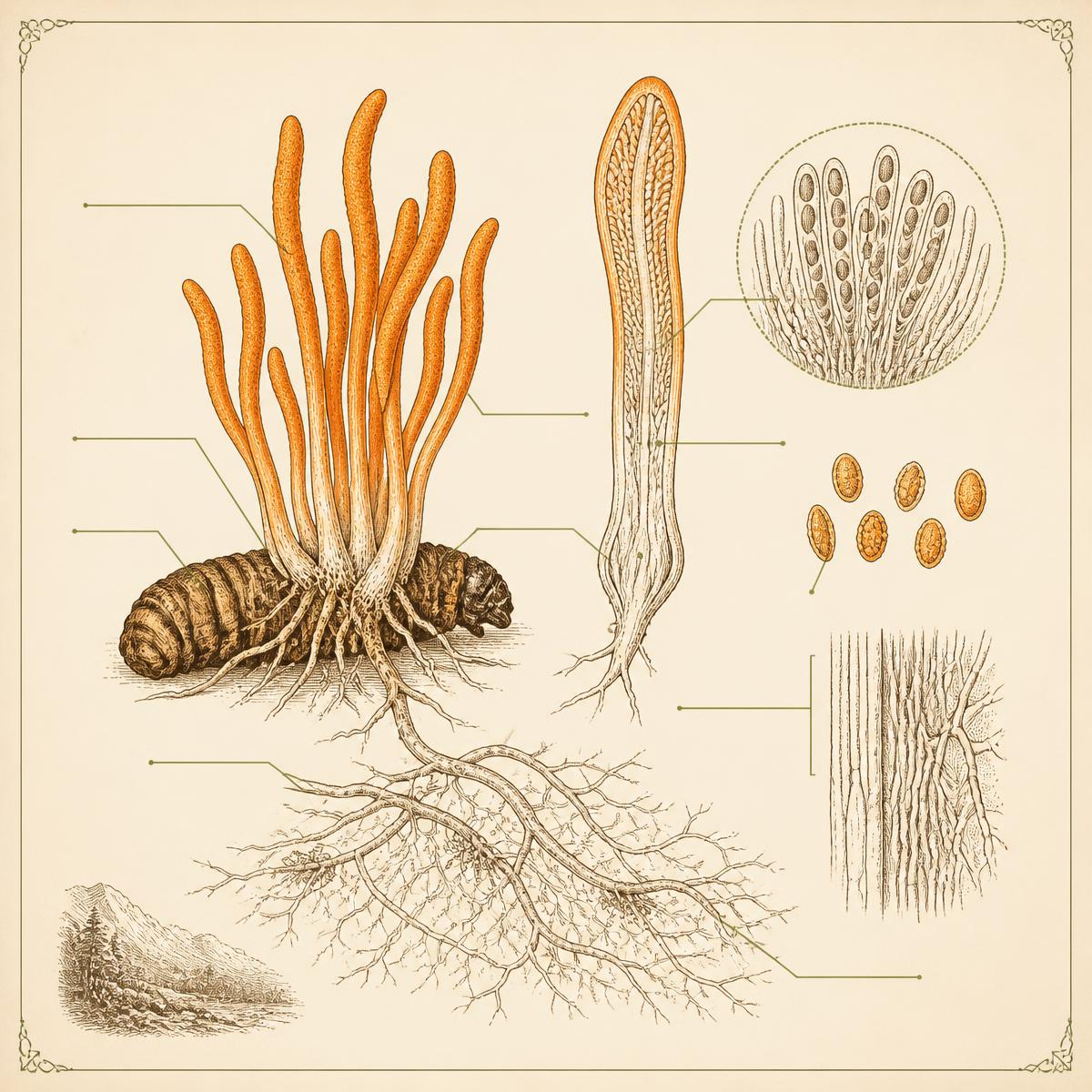
A microscopic ascospore lands and germinates — the entire organism starts here.
Thread-like hyphae colonise the substrate, forming a dense white network.
Under light and cool air the fungus raises orange clubs — the harvested part.
Chapter two
Wild relatives survive thin air and freezing soil above 3,000 m — conditions that shaped an unusual metabolism.
It produces cordycepin, a rare 3′-deoxyadenosine that closely mirrors the body's own adenosine.
Insect-derived and plant-grown forms differ chemically, which is why cultivation method matters more than name.
Unlike wild Ophiocordyceps, C. militaris fruits in a lab — no ecosystem is stripped to supply it.
Field notes
Also called Ophiocordyceps sinensis, yarsagumba or keeda jadi — the caterpillar fungus that made the genus famous. It is a different species from the one we cultivate, and the difference matters.
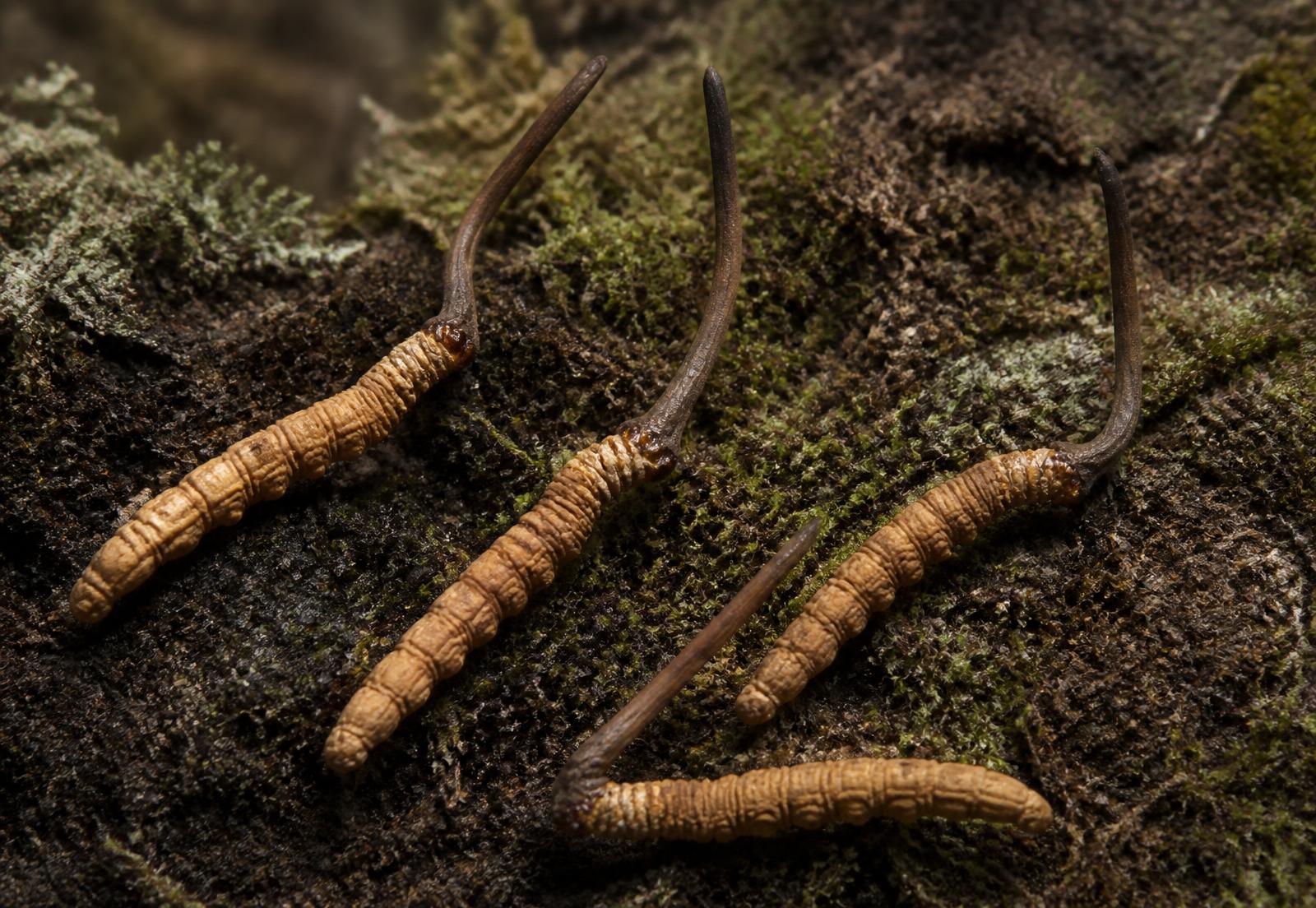
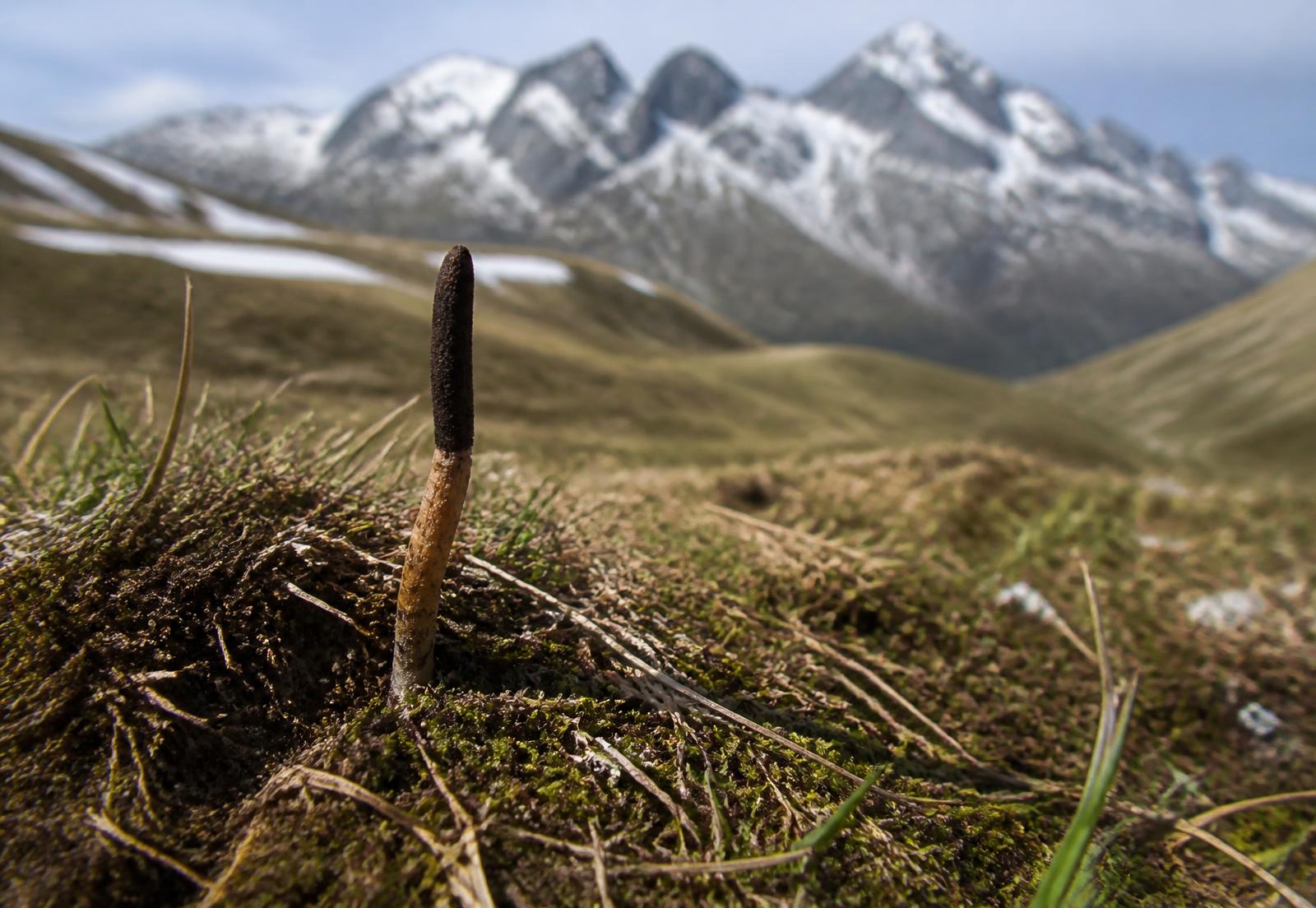
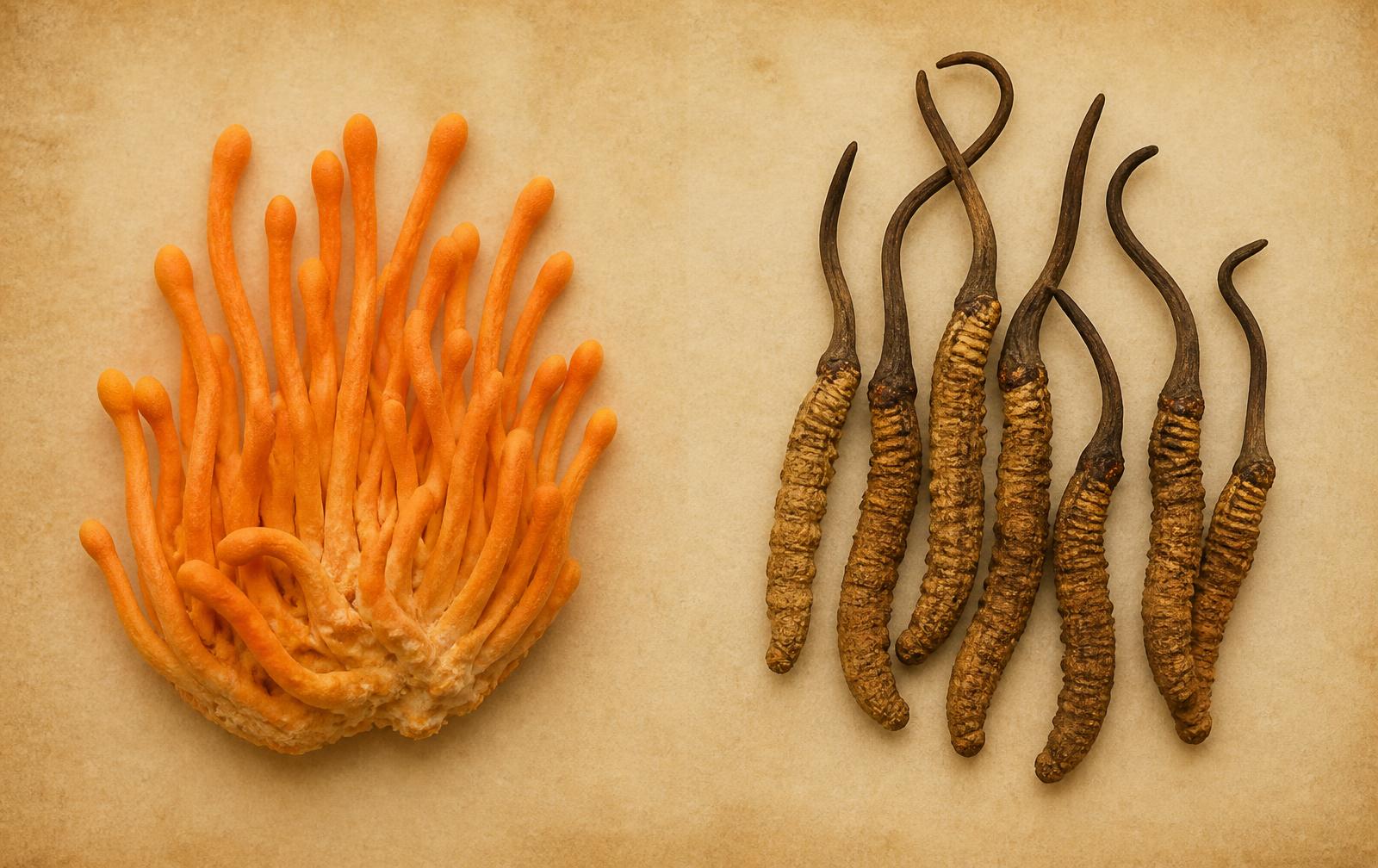
Wild only — parasitises ghost moth larvae in Himalayan soil.
Alpine meadows roughly 3,000–5,000 m across the Himalaya and Tibetan plateau.
Brown caterpillar body with a single dark, slender club emerging from the head.
Low to trace in most authenticated wild specimens.
Scarce, expensive and under conservation pressure from over-harvesting.
Why we cultivate militaris. Wild sinensis cannot be farmed, is frequently adulterated in the market and is ecologically fragile. C. militaris gives the same key nucleosides in a verifiable, repeatable and cruelty-free form.
Chapter three
Select a compound to read its role. These are the constituents laboratories actually measure — not marketing language.
C₁₀H₁₃N₅O₃
3′-deoxyadenosine, the molecule most associated with the genus. Structurally near-identical to adenosine, which is why it is the primary marker used to grade material.
Typical assay target: 0.3–1.2% by dry weight
Research directions
These two nucleosides drive most of the scientific interest in Cordyceps. Below is an honest map of the fields they appear in, with the stage of evidence stated up front.
Preclinical
Cordycepin is studied in laboratory and animal models for how it interferes with RNA synthesis in rapidly dividing cells. It is an active area of oncology research — not a treatment, and no human therapy is approved.
Early human data
Adenosine is a natural calming signal in the nervous system. Adaptogen-style studies look at stress resilience, low mood and sleep quality, mostly small and short-term so far.
Mixed / preliminary
Adenosine pathways relax blood vessels, so animal work has examined blood-flow and blood-pressure effects. Human evidence is thin, and anyone on cardiac or blood-pressure medication should speak to a doctor first.
In vitro / topical
Cordycepin extracts are tested for antioxidant activity, calming of inflammatory pathways linked to acne, and collagen-supporting effects in skin-cell cultures used in cosmetic research.
Animal models
Arthritis models have looked at cordycepin's effect on inflammatory mediators in joint tissue. Findings are encouraging in animals but not yet confirmed in controlled human trials.
Quality first
Every claim above depends on how much cordycepin and adenosine the material actually contains — which is why we assay each lot rather than describe benefits.
Important. Cordyceps is a food-grade fungus, not a medicine. Nothing on this page treats, cures or prevents cancer, depression, hypertension, arthritis or any skin condition. Research is preliminary and largely preclinical. Always consult a qualified healthcare professional before use.
If you are pregnant, breastfeeding, taking prescription medicines, or have a long-term health condition, talk to a qualified healthcare professional before adding Cordyceps to your routine. Do not use it as a replacement for prescribed treatment for cancer, depression, blood pressure, arthritis, or skin conditions.
Chapter four
We grade each research area by the weight of published human evidence. Filled marks indicate stronger study quality and replication, not proven benefit.
Small human trials have examined effects on VO₂ max and time-to-exhaustion, mostly in older or untrained adults, with modest and inconsistent results.
Reported in several short-duration randomised studies; subjective endpoints make effect sizes difficult to interpret.
Largely cell-culture and animal work on β-glucan pathways. Human confirmation remains limited.
Consistent in vitro capacity; translation to clinical outcomes is not established.
Preliminary preclinical signals only. Treat any claim in this area with scepticism.
Scientific disclaimer. This page is educational. Nothing here is medical advice, and Cordyceps is not intended to diagnose, treat, cure or prevent any disease. Research is ongoing and many findings are preliminary. Consult a qualified healthcare professional before using any supplement, particularly if pregnant, nursing, taking medication or managing a health condition.
Chapter five
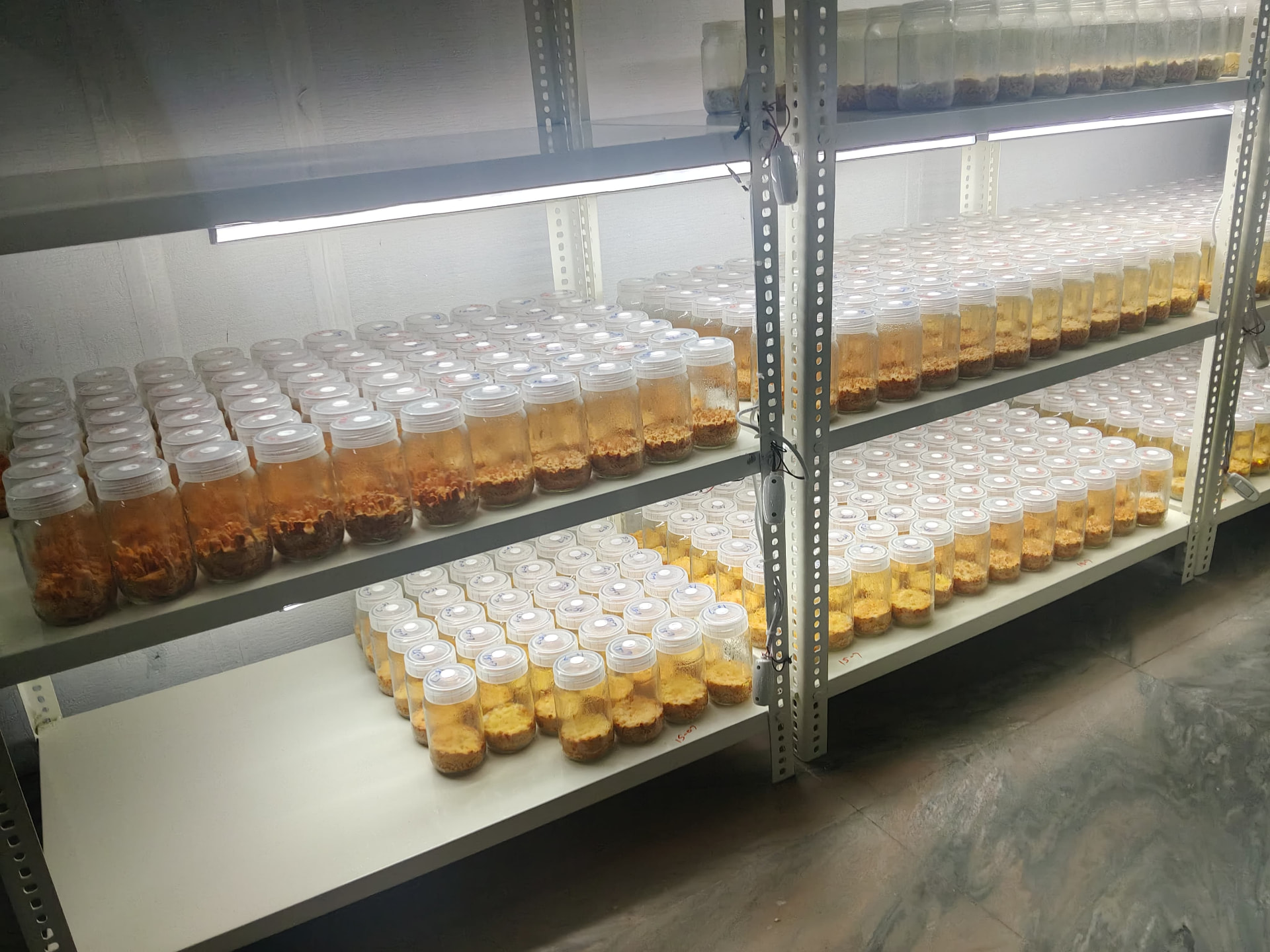
Six controlled stages. Nothing wild-harvested, nothing rushed.
Verified C. militaris cultures are maintained on slants and screened for vigour and cordycepin expression.
A plant-based nutrient medium is autoclaved, cooled and inoculated inside laminar flow.
Mycelium runs in darkness at controlled humidity until the substrate is fully white.
Light, cool air and gas exchange trigger the orange stroma over several weeks.
Low-temperature drying preserves heat-sensitive constituents before uniform milling.
Each lot is checked for identity, moisture, marker content and contaminant limits.
Chapter six
Summaries of directions in the published literature, written in plain language. Nothing below should be read as a health claim.
Chemistry
Work on the C. militaris genome identified the gene cluster responsible for cordycepin, explaining why strain choice changes output far more than growing time.
Cultivation
Controlled-environment studies consistently show photoperiod and CO₂ level as the dominant levers for stroma formation and pigment intensity.
Analysis
Reverse-phase HPLC for cordycepin and adenosine is the accepted way to separate authentic fruiting body from mycelium-on-grain material.
Open questions
Published trials vary widely in dose, extract type and duration, which is the main reason conclusions across studies conflict.

Chapter seven
Radhvan Origins is a cultivation and education studio built around one organism at a time. We begin with Cordyceps militaris because it sits exactly where our interest lives — old traditional use, real modern chemistry, and a great deal of noise in between.
Our commitment is unglamorous: grow it properly, measure it honestly, and explain it without exaggeration. Welcome. Together.
Every statement we publish is tied to a method or a paper — or it is marked as unknown.
Lab fruiting keeps alpine ecosystems out of the supply chain.
We would rather understand a single species fully than list twenty.
Chapter eight
Nothing is on sale yet. This is what is growing and what follows it.
Dried orange stroma, intact and gradeable by eye.
In cultivationLow-temperature dried and uniformly milled.
In cultivationWater and ethanol fractions recombined.
In developmentSingle-ingredient, marker-verified dosing.
In developmentChapter nine
No. The wild Himalayan species is Ophiocordyceps sinensis. C. militaris is a related species that can be grown on plant substrate and produces a true fruiting body, which is why it is used in modern products.
In nature, yes — Cordyceps species parasitise insect larvae. Cultivated C. militaris for nutritional use is grown on sterile plant-based media, with no insect material involved.
The fruiting body is the visible orange structure, distinct from the mycelium that grows underneath. Products made from mycelium grown on grain have a different composition, so the distinction changes what you are actually buying.
It is the most useful single marker, but not the whole picture. Reputable material reports cordycepin alongside adenosine, moisture and contaminant testing from an accredited laboratory.
Anyone pregnant or nursing, on immunosuppressants or anticoagulants, or preparing for surgery should speak with a clinician first. Fungal allergies are also a consideration.
We are still in the cultivation and verification phase. Joining the list is the only way to be notified when the first batch is released.